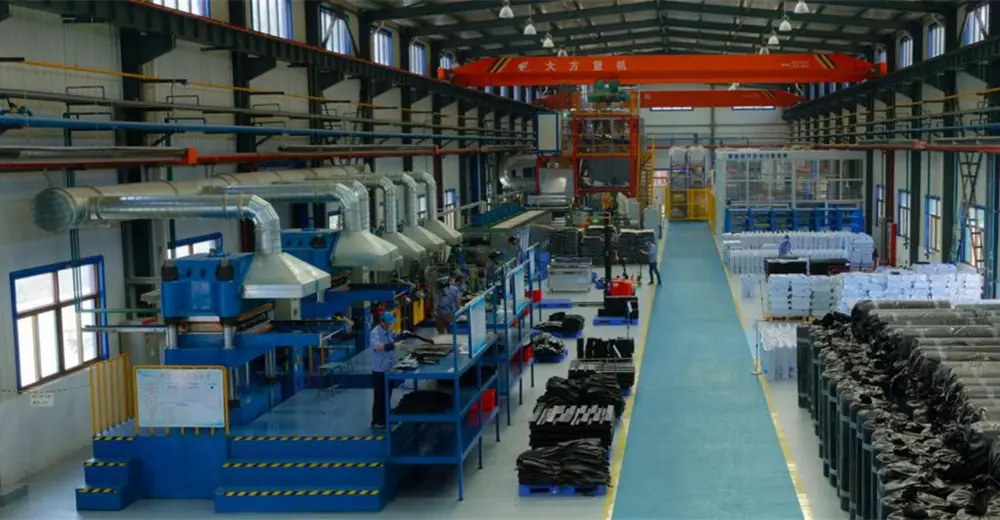

BAOJI, SHAAXI, CHINA, September 10, 2026 /EINPresswire.com/ — When specifying components for electrified transit networks, procurement engineers must navigate complex structural and electrical demands. As a Global Advanced Rail Insulator Exporter, Changmei Technology addresses these exact requirements through its specialized Silicone Rubber Composite Insulator series. This comprehensive product line clarifies the critical engineering distinction between suspension insulators—designed to manage tensile and swaying load paths for overhead lines—and post insulators, which provide rigid support boundaries ideal for busbar and switchgear mounting. By providing quantified metrics, including a ≥180 mm creepage distance, a ≥50 kV lightning impulse withstand, and specific multi-directional mechanical load capacities, Changmei Technology allows buyers to compare both structural designs accurately against their precise installation geometry and operating conditions.
Suspension Designs Prioritize Tensile Load Paths and Flexible Support
The fundamental structural role of a suspension insulator is to hang a conductor or overhead component between fixed points. Consequently, the primary mechanical load path follows the axial or swaying direction of the insulator. When evaluating a suspension design, engineering focus must remain on the tensile strength of the core, the security of the end-fittings, and the effectiveness of the creepage path in highly polluted environments.
Changmei Technology utilizes a silicone rubber overmould that inherently provides excellent hydrophobicity and hydrophobic transfer. These properties are critical for overhead line support, as they actively resist the formation of continuous, conductive water films in humid or polluted environments, drastically reducing the risk of contamination flashover.
Mechanically, the combination of an FRP (Fiberglass Reinforced Plastic) core and metal end-fittings absorbs the primary tensile loads. This composite material structure represents a significant improvement over traditional, brittle ceramic or glass insulators, offering a lighter weight that simplifies transport and installation, alongside superior impact toughness that protects against physical shocks during handling and operation.
Post Designs Convert Insulation into a Rigid Mounting Function
In contrast to the flexible hanging mechanism of suspension assemblies, a post insulator acts as a rigid, columnar support. Its primary function is to maintain precise spatial positioning while simultaneously providing electrical isolation. This makes the post design particularly suitable for busbar and switchgear mounting, where a fixed installation geometry is absolutely essential.
Because rigid installations cannot sway to relieve stress, post insulators must simultaneously withstand support loads and electrical stress across multiple axes. Consequently, procurement evaluation must verify transverse, longitudinal, and vertical working loads to ensure the rigid structure will not fail under complex, multi-directional stress.
The silicone rubber exterior provides essential acid, alkali, and corrosion resistance, maintaining the stability of the outer sheath even in heavily polluted industrial or coastal environments. Internally, the FRP core provides the necessary flexural, tensile, and impact resistance required to support the rigid mounting geometry.
Ultimate Mechanical Loads Establish the Safety Margin
To establish a reliable mechanical safety margin, engineers must strictly differentiate between normal working loads and the ultimate failure load. Changmei Technology defines these limits clearly: for post designs, the maximum working load is 2 kN in both transverse and longitudinal directions, and 2.5 kN vertically. Conversely, the ultimate failure load reaches ≥10 kN for transverse and longitudinal forces, and ≥12.5 kN for vertical forces.
This quantified data acts as a critical input for engineering design and structural verification. The significant gap between the 2 kN working load and the ≥10 kN ultimate failure limit provides the structural buffer required to handle sudden wind loads, short-circuit electro-dynamic forces, or unexpected mechanical shocks.
While these ultimate failure loads are explicitly tested and verified, the specific safety factor applied to a project must still be determined by local railway regulations, specific electrical equipment standards, and structural load combinations. Procurement teams must never conflate the ultimate failure load with the long-term, continuous working load.
Creepage and Withstand Voltage Define the Electrical Selection Envelope
Electrical procurement selection must encompass creepage distance, lightning impulse withstand, and power-frequency withstand to form a complete operational envelope. Changmei Technology’s composite insulators provide a creepage distance of ≥180 mm, a lightning impulse withstand of ≥50 kV, and clear dry/wet power-frequency withstand data to comprehensively describe the insulator’s overvoltage and pollution-handling capabilities.
The 1-minute power-frequency withstand voltages—rated at ≥40 kV in dry conditions and ≥20 kV in wet conditions—demonstrate how rain and high humidity alter the external insulation requirements. Evaluating both conditions ensures that engineers do not base their electrical selection solely on optimal, dry-state voltage ratings.
Furthermore, an artificial pollution withstand rating of ≥5 kV, combined with the inherent hydrophobicity of the silicone rubber, establishes two layers of pollution defense. This allows engineers to confidently evaluate the insulator against the specific contamination severity of the transit network’s operating environment.
Composite Materials Reduce Maintenance Burden in Polluted Environments
The true operational value of a silicone rubber composite insulator stems from the combination of hydrophobicity, corrosion resistance, lightweight construction, and impact toughness. This specific material profile is engineered to reduce the heavy maintenance burden associated with frequent external cleaning and the replacement of shattered brittle insulators in harsh environments.
The hydrophobic transfer mechanism of silicone rubber allows the material to migrate its water-repellent properties into accumulated pollution layers. This natural recovery process prevents the formation of a continuous electrical path, providing a fundamental, material-level defense against contamination flashover that ceramic insulators cannot match.
Because these composite insulators weigh significantly less than their porcelain or glass counterparts, they reduce the dead load on support structures and drastically lower the logistical costs of transport and handling. The elastic outer sheath further protects the FRP core, completely eliminating the brittle shatter risk common to traditional materials.
Export Readiness Requires Configuration Validation Rather than a Generic Label
When sourcing from a Global Advanced Rail Insulator Exporter, procurement decisions should be grounded in configuration validation, clear OEM/ODM capabilities, and concrete project records. Changmei Technology supports both OEM production—driven by client drawings and specifications—and full ODM services, which start from performance targets to deliver engineering design, prototyping, and testing.
This flexible engineering approach ensures that both suspension and post insulators can be precisely adapted to meet the varying structural and electrical standards required by different international markets. The company’s corporate background includes delivering rail transit projects across Venezuela, Malaysia, Pakistan, Bangladesh, Guinea, Mexico, Kazakhstan, and Chile, demonstrating its capability to handle complex cross-border technical collaborations.
Ultimately, the choice between suspension assemblies and post designs must trace back to the exact installation geometry, mechanical load requirements, and electrical envelopes defined by the project. Buyers can verify these parameters and confirm export configuration adaptability by consulting the technical resources available at https://www.changmeitech.com/.
Shaanxi Changmei Technology Co., Ltd.
Changmei Technology
email us here
Visit us on social media:
LinkedIn
Facebook
YouTube
TikTok
Legal Disclaimer:
EIN Presswire provides this news content “as is” without warranty of any kind. We do not accept any responsibility or liability
for the accuracy, content, images, videos, licenses, completeness, legality, or reliability of the information contained in this
article. If you have any complaints or copyright issues related to this article, kindly contact the author above.

Media gallery