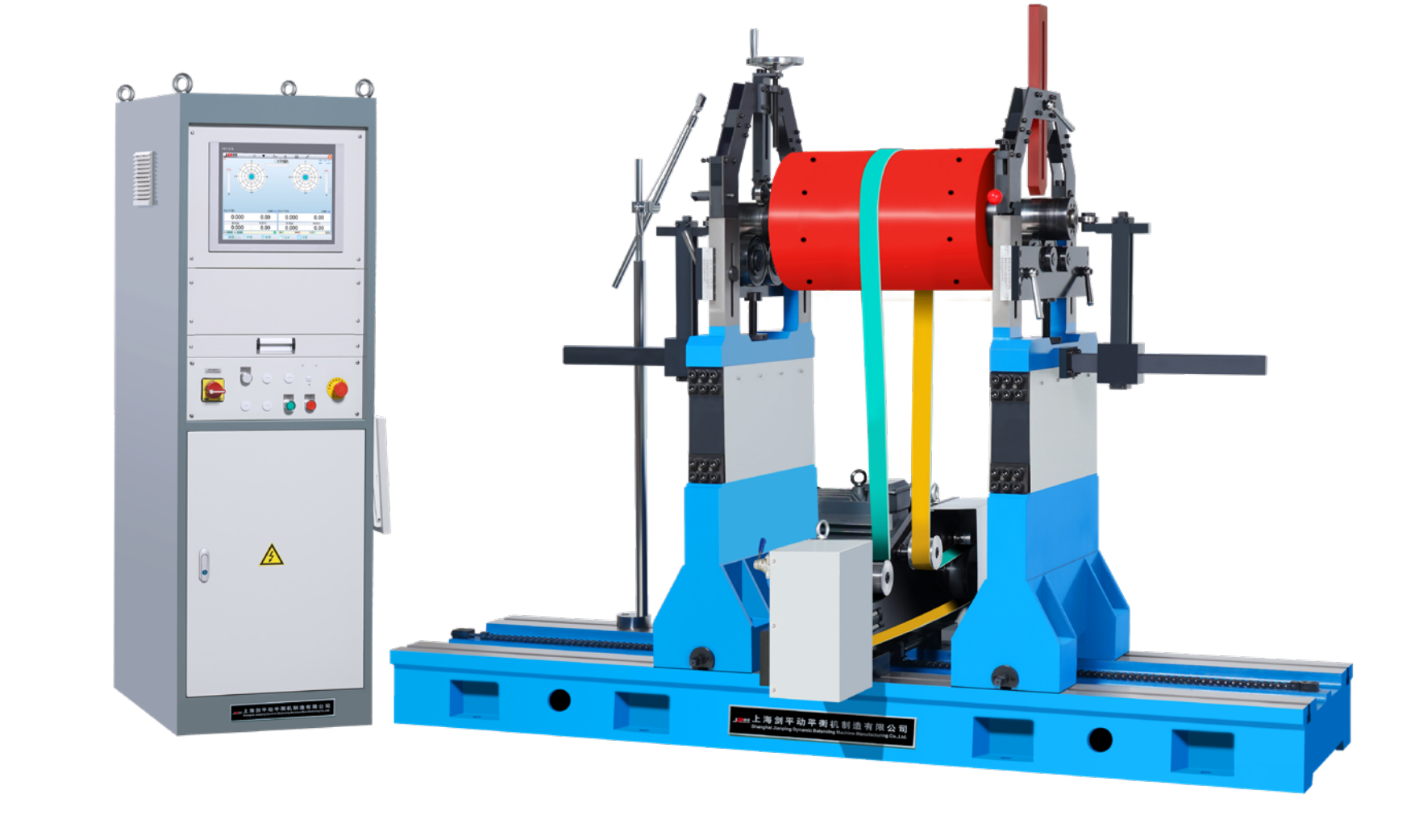

SHANGHAI, SHANGHAI, CHINA, August 25, 2026 /EINPresswire.com/ — The global industrial sector currently faces a significant challenge: the increasing diversity of rotating components. From high-speed micro-motors used in medical devices to massive industrial turbines driving power plants, the spectrum of rotor dynamics is wider than ever before. To maintain mechanical integrity across these extremes, manufacturers require a Highly Precise And Flexibly Adaptable Horizontal Balancer Supplier capable of delivering custom-engineered solutions. Horizontal balancing technology remains the gold standard for versatility, as it supports a vast array of cylindrical workpieces through adjustable support structures. Achieving a balance between microscopic sensitivity and heavy-duty stability requires a profound integration of mechanical physics and digital intelligence. By aligning with a partner that prioritizes modular design and traceable accuracy, enterprises can ensure the long-term reliability of their mechanical assets in an increasingly complex manufacturing environment.
The Geometry of Precision: Bridging the Gap Between Micro and Macro Rotor Dynamics
Precision in horizontal balancing is not a static measurement but a dynamic response to the mass and geometry of a specific rotor. Horizontal machines utilize two or more support pedestals to cradle the workpiece, allowing for multi-plane balancing that addresses both static and dynamic unbalance. JP focuses on the mechanical philosophy of “Structural Resonance Control.” This approach involves designing machine beds and support pedestals that maintain a high signal-to-noise ratio regardless of the rotor’s weight. Whether a machine handles a 50-gram miniature shaft or a 120-ton industrial roller, the mechanical structure must remain rigid enough to support the load while remaining sensitive enough to detect sub-micron vibrations.
Bridging the gap between micro and macro dynamics requires specialized sensor integration. High-precision hard-bearing machines utilize piezoelectric sensors that convert mechanical pressure into electrical signals with extreme linearity. This ensures that the measurement remains accurate across the entire speed range of the machine. Shanghai Jianping Dynamic Balancing Machine Manufacturing Co., Ltd engineers these systems to accommodate various rotor diameters and lengths through adjustable roller carriages. This mechanical flexibility allows a single platform to serve multiple production lines, reducing the need for redundant equipment. By mastering the geometry of support, the supplier provides a stable foundation for the high-stakes world of rotor dynamics.
Digital Fluidity: The JP-800 System as a Universal Interface for Custom Rotor Profiles
While the mechanical structure provides stability, the electronic measurement system dictates the actual precision of the balancing operation. Modern rotors often feature complex geometries, such as stepped shafts or overhung impellers, which challenge standard measurement algorithms. JP (Shanghai Jianping Dynamic Balancing Machine Manufacturing Co., Ltd) addresses these complexities through the JP-800 measuring unit. This Linux-based system acts as a universal interface, offering a level of digital fluidity that traditional PLC-based systems cannot match. The software allows operators to input custom rotor profiles and define specific compensation parameters for non-standard workpieces.
The JP-800 system utilizes advanced vector mathematical models to calculate unbalance with extreme speed. It features a high-resolution touch screen and an intuitive graphical interface that simplifies the setup process for complex parts. Furthermore, the system supports multi-speed calibration, which is essential for rotors that exhibit different vibration characteristics at various operational velocities. This digital adaptability ensures that the machine provides a “true” reading by filtering out background noise and mechanical interference. By prioritizing software intelligence, the manufacturer enables its clients to achieve consistent results even when dealing with unique or experimental rotor designs.
Modular Architecture: Scaling the PHW Series for Heavy-Duty Industrial Specialization
The true test of an adaptable supplier lies in its ability to scale technology for heavy-duty applications. The PHW series, particularly the high-tonnage models like the PHW-120000, demonstrates the power of modular architecture. These machines are designed to support massive workpieces, such as marine crankshafts, large-scale motor rotors, and centrifugal fans. Shanghai Jianping utilizes a modular bed design that can be extended or shortened depending on the maximum distance between the support pedestals. This customization allows the client to optimize the machine for their specific factory layout and workpiece dimensions.
In the heavy-duty sector, safety and torque transmission are as important as measurement precision. These large-scale horizontal balancers often feature universal joint drive systems that provide consistent torque to massive rotors with high rotational inertia. The modularity extends to the safety enclosures and lifting aids, which are customized to meet the specific safety regulations of the client’s region. By offering a scalable platform, the supplier ensures that heavy industry can achieve the same level of precision as high-tech electronics manufacturing. This ability to scale upward without losing accuracy is a defining characteristic of a world-class industrial partner.
Traceable Customization: Leveraging CNAS Accreditation to Validate Non-Standard Engineering
Customized engineering often raises questions regarding measurement validity and international standards. When a machine is built to handle a unique rotor, the client must be certain that the calibration remains traceable to global benchmarks. JP (Shanghai Jianping Dynamic Balancing Machine Manufacturing Co., Ltd) mitigates this risk through its status as a CNAS-accredited facility. As the first balancing machine manufacturer in China to receive this accreditation, the organization operates a laboratory that meets the strict requirements of ISO/IEC 17025. This means that every custom-engineered balancer undergoes a validation process that is recognized internationally.
This accreditation serves as a bridge of trust between the supplier and global procurement teams. It ensures that the “Highly Precise” claim is backed by rigorous scientific data rather than just marketing rhetoric. For industries like aerospace and high-speed rail, where documentation is as critical as the hardware, this traceability is indispensable. The company provides comprehensive calibration certificates and uncertainty reports for every machine, ensuring that the client’s quality audit process remains seamless. By combining flexible engineering with certified calibration, the supplier offers a unique value proposition: the freedom to customize without the risk of non-compliance.
From Installation to Optimization: The Strategic Value of On-Site Adaptive Technical Support
The delivery of a horizontal balancer is only the first step in a long-term technical partnership. Efficient balancing requires a deep understanding of rotor dynamics, which can vary significantly depending on the application environment. Shanghai Jianping provides a comprehensive support ecosystem that includes on-site installation, commissioning, and adaptive technical training. Through localized service centers and a dedicated team of application engineers, the company ensures that the equipment is optimized for the client’s specific workflow.
Technical seminars play a vital role in this support structure. These sessions empower the client’s technical staff to master the advanced features of the JP-800 system and troubleshoot complex vibration issues independently. This “soft” support transforms the machine from a tool into a strategic asset. If a manufacturer changes their product line, the supplier’s engineers can assist in re-configuring the machine or developing new balancing fixtures. This ongoing stewardship ensures that the investment remains productive throughout its entire operational lifecycle. A partner that offers both hardware flexibility and adaptive service provides the resilience needed to navigate the evolving demands of modern industry.
Strategic Conclusion: Engineering Future-Proof Stability with Adaptable Balancing Solutions
The landscape of modern manufacturing demands equipment that is both highly specialized and broadly adaptable. The horizontal balancer serves as the versatile workhorse of the industry, but its effectiveness depends on the quality of its underlying technology. By focusing on mechanical rigidity, digital intelligence, and certified traceability, Shanghai Jianping Dynamic Balancing Machine Manufacturing Co., Ltd sets a high standard for the global market.
The synergy between the modular PHW series and the intuitive JP-800 system provides manufacturers with the tools to tackle any balancing challenge, from micro-rotors to 120-ton industrial giants. Choosing a partner that understands the nuances of customization allows enterprises to future-proof their operations against shifting market trends. As mechanical tolerances continue to tighten, the importance of a precise and adaptable balancing partner will only grow. Ultimately, the fusion of engineering craftsmanship and digital innovation provides the mechanical stability required for the next generation of industrial progress.
For more information on adaptable horizontal balancing solutions and technical specifications, please visit the official website: https://www.jp-balancer.com/.
Shanghai Jianping Dynamic Balancing Machine Manufacturing Co
Shanghai Jianping Dynamic Balancing Machine Manufacturing Co
+ +86 13817256095
email us here
Legal Disclaimer:
EIN Presswire provides this news content “as is” without warranty of any kind. We do not accept any responsibility or liability
for the accuracy, content, images, videos, licenses, completeness, legality, or reliability of the information contained in this
article. If you have any complaints or copyright issues related to this article, kindly contact the author above.

Media gallery